Listen
Mantra Library
Albums & Releases

Books
Bibliography coming soon.


Musician · Guelph, Ontario, Canada
Brenda McMorrow is a Canadian devotional chant and kirtan artist known for a warmly embracing style of mantra medicine music. She blends acoustic folk, world rhythms and ancient Indian chants with a sweetly introspective singer-songwriter's sensibility. With Sanskrit mantra and kirtan (call and response singing) as the basis, she weaves in Latin American medicine songs and her own English lyrics, creating what she describes as a healing and uplifting tapestry with the audience.
Brenda McMorrow is a Canadian devotional chant and kirtan artist known for a warmly embracing style of mantra medicine music. She blends acoustic folk, world rhythms and ancient Indian chants with a sweetly introspective singer-songwriter's sensibility. With Sanskrit mantra and kirtan (call and response singing) as the basis, she weaves in Latin American medicine songs and her own English lyrics, creating what she describes as a healing and uplifting tapestry with the audience.
She began as a folk/pop singer-songwriter, including with the 1990s London band Julia Propeller. In 2004, at a yoga workshop, she took part in her first Sanskrit chant, Om Namah Shivaya. "All I knew was that every cell in my body started vibrating, and I felt absolute joy," she remembers. While in India soon afterward, she began combining her own songwriting with ancient Sanskrit chants, and she has followed that path since.
Brenda is a featured artist on the White Swan Records roster and has six albums. She has shared festival stages with Krishna Das and Snatam Kaur, been accompanied by Grammy-winning cellist David Darling, and been a guest musician with kirtan artists including Jai Uttal, David Newman and Mirabai Ceiba. Her work has taken her to Bhakti Yoga festivals and events across North America, Europe and Asia. Yoga Journal praised her "knack for expressing the deepest realizations in the sparsest lyrics," and Ram Dass said, "Brenda has a gift."
She sings and plays acoustic guitar, joined by a rotating group of guest musicians, in yoga studios, performance halls, churches, private homes and outdoor festivals. A graduate of the DevaTree School of Yoga 200-hour Yoga Teacher Training Program, she brings yoga into her workshops and retreats. When not travelling, she calls Guelph, Ontario…
Bibliography coming soon.
Brenda McMorrow is a Canadian conscious music artist whose work has carved a distinctive niche in the transformational music landscape—one defined by synthesis rather than imitation, by restraint rather than excess. Over the past several years, she has built a dedicated following of more than 20,000 listeners on Spotify, but her real impact is measured in the sacred spaces she creates at yoga festivals, retreat centers, and live performances where seekers gather for presence and connection. What distinguishes her from the ambient-yoga-music glut is the specificity of her artistic choices: every recording decision, every mantra selection, every sonic texture serves her vision rather than a generic "spiritual" aesthetic. Her discography—spanning Sanskrit devotional work, Spanish-language ceremonial pieces, and meditative interpretations of classical mantras—demonstrates an artist unafraid to move across traditions while maintaining coherence. McMorrow's appeal lies in her refusal to reduce conscious music to background filler; instead, she treats each album as a complete artistic statement with its own architecture and intention.
McMorrow's work draws from Hindu devotional traditions—evident in her repeated use of Sanskrit mantras like Gayatri, Namah Shivaya, Lokah Samastha, and the goddess names Anandamayi and Lakshmi—while also embracing complementary lineages that include Kundalini Yoga practice (visible in her use of Ek Ong Kar, a Sikh mantra), earth-centered spirituality (reflected in Spanish-language works like Tierra Mi Cuerpo), and contemporary consciousness music. Rather than claiming deep initiation in any single tradition, her aesthetic suggests familiarity with multiple paths and a commitment to honoring the integrity of each. This cross-tradition approach is common among Western conscious music artists but not always executed with the specificity McMorrow demonstrates—she doesn't dilute these traditions into generic "universal" spirituality, but instead learns the Sanskrit pronunciation, respects the historical context of each mantra, and treats them as living practices rather than decorative elements. Her work sits squarely within the yoga festival and transformational retreat circuit, where such eclecticism is expected and valued.
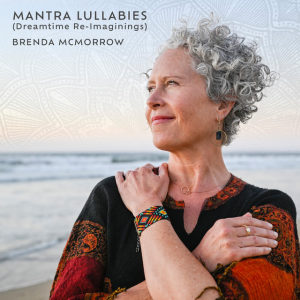
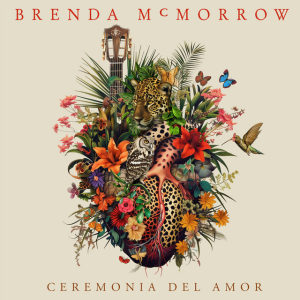
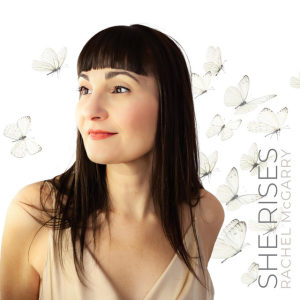
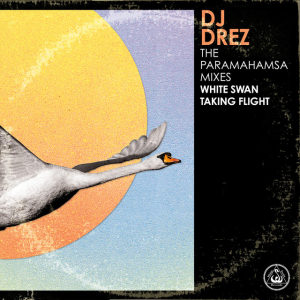
Begin with *SHE RISES* (2023), her most cohesive and accessible full-length album, which serves as an ideal introduction to her sonic sensibility and thematic commitments. This ten-track work demonstrates both her vocal presence and her understanding of how to sequence material for sustained listening—not background music, but active engagement. If you prefer shorter entry points, the single "Gayatri / Giver of Light" (2022) or "Aham Prema / Love Divine" (2024) offer concentrated examples of her mantra-based work, while *Ceremonia Del Amor* (2024) introduces listeners to her Spanish-language ceremonial side. For those drawn to more meditative, ambient textures, *The Paramahamsa Mixes (White Swan Taking Flight)* (2021) presents a 12-track journey that's less devotional intensity and more sustained atmospheric presence. Her most recent release, *Mantra Lullabies (Dreamtime Re-Imaginings)* (2025), suggests an evolution toward gentler, more intimate sonic spaces—worth exploring once you've found your footing with earlier work. All of these are available on Spotify, making experimentation low-friction.
Most consciousness music artists specialize—they either do pure devotional chant, or ambient instrumental, or yoga class playlists. McMorrow refuses this narrowing, moving fluidly across Sanskrit mantra work (*Gayatri*, *Lokah Samastha*), Spanish-language Earth-centered ceremony (*7 Caminos*, *Tierra Mi Cuerpo*), and hybrid tracks that pair mantras across traditions (*Aham Prema / Love Divine*, *Sat Patim/Om Shrim*). What's striking is that these aren't genre exercises—they're coherent artistic choices that demonstrate respect for each tradition's integrity. Her willingness to reinterpret and remix her own work (see *The Paramahamsa Mixes* and the *Entheo Remix Ambient Version* of *Reconcile*) suggests an artist thinking about how consciousness music functions in different contexts—retreat, yoga class, solo meditation, ceremony—rather than one recording that must serve all purposes. Additionally, her production sensibility emphasizes clarity over production polish; listeners encounter her voice and her musical choices directly, without the wall of reverb or excessive layering that obscures many yoga artists' work. The frequency and consistency of her releases—multiple albums per year since 2020—indicates commitment to iterative exploration rather than resting on a single successful formula.
McMorrow's music is fundamentally not for listeners seeking high-energy electronic dance music, driving percussion, or what some call "spiritual EDM"—her work operates at meditation and yoga class tempos, in acoustic and acoustic-adjacent spaces, with minimal percussion. Listeners expecting a single "brand" of spirituality will find her eclecticism frustrating; if you want pure Hinduism, pure Kundalini Yoga, or pure earth ceremony, her mixing of traditions may feel diluted. Her voice carries a certain tonal quality and vibrato that isn't universally appreciated—some listeners find her delivery too prominent in mixes where they want to feel dissolved into sound rather than held by a specific singer's presence. Those uncomfortable with Sanskrit chanting, Spanish language work, or explicit goddess references may find portions of her catalog either unfamiliar or ideologically misaligned. Additionally, listeners seeking narrative-driven content—concept albums with storytelling, spoken-word elements, or teaching integrated into the music—will need to look elsewhere; McMorrow's work is primarily instrumental and vocal mantra, not pedagogical. Finally, for those who use conscious music purely as ambient background to workspace or driving, her intentionality and artistic precision can feel demanding rather than soothing—she asks for attention.
The most direct path is her official website at brendamcmorrow.com, where tour dates, new releases, and performance information are typically announced first. McMorrow maintains active presence on Spotify (with 20,452 followers), where new singles and albums appear regularly—her consistent release schedule means new work typically arrives multiple times per year (she released five projects in 2025 alone, including the album *Mantra Lullabies (Dreamtime Re-Imaginings)* in November and *7 Caminos* in March). For live performance updates, especially appearances at yoga festivals and retreat centers where she performs regularly, her website is your best resource; she doesn't appear to maintain a publicized social media presence (as of available data), so direct-to-source checking is necessary. Spotify's release notification feature will alert you to new singles and albums automatically if you follow her artist page. Given that she hasn't publicly announced major tour dates in crawlable data, interested listeners should check her website quarterly or subscribe to any email list she offers—retreat centers and yoga festivals that book her typically announce lineups months in advance, so keeping an eye on major North American yoga festival calendars may also surface appearances.
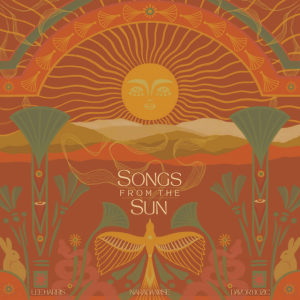
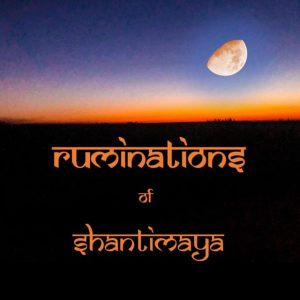
*SHE RISES* (2023) remains her most focused statement to date—a ten-track album that synthesizes her approach with thematic coherence and vocal confidence. *Songs From The Sun* (2024) and *Ceremonia Del Amor* (2024) represent parallel explorations: the former more introspective and solar-aligned, the latter centered on love and ceremony with Spanish-language elements that broaden her palette. For those drawn to more experimental or atmospheric work, *The Paramahamsa Mixes (White Swan Taking Flight)* (2021) presents a 12-track remix and reinterpretation cycle that shows her willingness to deconstruct her own compositions. *Ruminations of Shantimaya* (2020) marked an earlier evolution point, demonstrating her moving toward longer-form meditative pieces and complex mantra layering. Most recently, *Mantra Lullabies (Dreamtime Re-Imaginings)* (2025) appears to represent a new chapter—shorter, gentler, more intimate in scope, suggesting her artistic vision continues to deepen. *7 Caminos* (2025), with its Spanish-language approach and eight-track structure, offers another entry point for those interested in her cross-cultural work. These six albums, taken together, trace her evolution from 2020 to 2025 and demonstrate an artist in genuine artistic development rather than repeating formula.
*Gayatri / Giver of Light* (2022) and its standalone 2020 version *Gayatri* both function beautifully as meditation-focused mantra work—the Gayatri mantra itself is traditionally used for illumination and clarity practices, and McMorrow's recording respects that lineage while offering accessibility to Western practitioners. For yoga class settings, *Lokah Samastha/Lakshmi Dreams* (2025), *Aham Prema / Love Divine* (2024), and *Govinda Gopala Meditative Chill* (2025) work as grounding-to-closing sequences due to their moderate tempos and lack of jarring elements. *Anandamayi Dreamtime* (2025) and the tracks from *Mantra Lullabies (Dreamtime Re-Imaginings)* (2025) read as explicitly dreamtime/sleep-oriented work—useful for restorative practices or bedtime rituals. For ceremony-specific contexts, *Ceremonia Del Amor* (2024) as a full album serves exactly that function, while *7 Caminos* (2025) seems designed for multi-stage ritual or journey-work given its eight-track structure and thematic coherence. *The Paramahamsa Mixes (White Swan Taking Flight)* (2021), at twelve tracks, functions as a complete meditation journey suitable for longer retreats or extended personal practice. For practitioners committed to specific traditions, *In Love With the One / Ek Ong Kar* (2021) reaches into Kundalini Yoga territory, while *Sat Patim/Om Shrim* (2021) combines multiple mantric traditions in a single track.
McMorrow's sonic palette emphasizes acoustic and organic instrumentation—her voice carries the primary melodic and devotional weight, supported by what appears to be harmonium (the traditional hand-pumped keyboard of Indian classical music), acoustic guitar, and minimal percussion or none at all. The production aesthetic favors clarity over effects; listeners encounter her vocal timbre directly, without the heavy reverb or delay processing that obscures many contemporary yoga artists' work. Her arrangements tend toward space and breathing room rather than dense layering—even on busier tracks, individual instrumental voices remain distinct and audible, suggesting a commitment to serving the mantra or lyrical content rather than creating immersive sonic walls. Where remixing appears (see *The Paramahamsa Mixes* and *Reconcile (Entheo Remix Ambient Version)*), production becomes more abstract and electronic, but these remain secondary explorations rather than her core aesthetic. The specificity of her instrumental choices—harmonium paired with Spanish guitar on *7 Caminos*, for instance—suggests deliberate curation for each project rather than a single signature sound repeated across albums. Her voice itself ranges from direct and unadorned to layered in tight vocal harmonies, but always maintains enough presence to carry the mantra's meaning and resonance rather than functioning as one instrument among many.
Available data does not indicate major press coverage, critical reviews, or awards that would typically appear in publications like Yoga Journal, Songlines, or mainstream music media. This is not unusual for conscious music artists working in the transformational and retreat circuit—impact is often measured through direct listener connection, festival appearances, and retreat center recommendations rather than traditional music journalism. Her presence on Spotify (20,452 followers, rank 33 in popularity) reflects a genuine and growing listener base, but one built through community rather than press machinery. The consistency of her releases—multiple full albums per year since 2020—suggests she operates with creative autonomy and funding from direct audience support rather than major label backing or grant-dependent models. Her work's appearance on at least one curated compilation, *Lifeart, the Sound of Yoga# 2 Mantras* (2022), indicates recognition within yoga and conscious music curator circles. For serious seekers, the absence of heavy mainstream press coverage may actually be a strength—it suggests an artist building work for its own integrity rather than chasing media attention, and working directly with the retreat and yoga festival communities that actually use this music in practice contexts.
Is this you? Claim this page ›
BrightStar is the global directory of artists, teachers, and healers in the wellness and spiritual movement. Find your next experience — or add yourself.
Browse 14,000+ curated profiles across kirtan, yoga, meditation, and beyond.
Explore directory →Kirtan, retreats, sound baths, breathwork, ceremonies — happening this week.
Browse events →Are you an artist, teacher, or healer? Get listed — free, AI-assisted, live in minutes.
Get started →


